
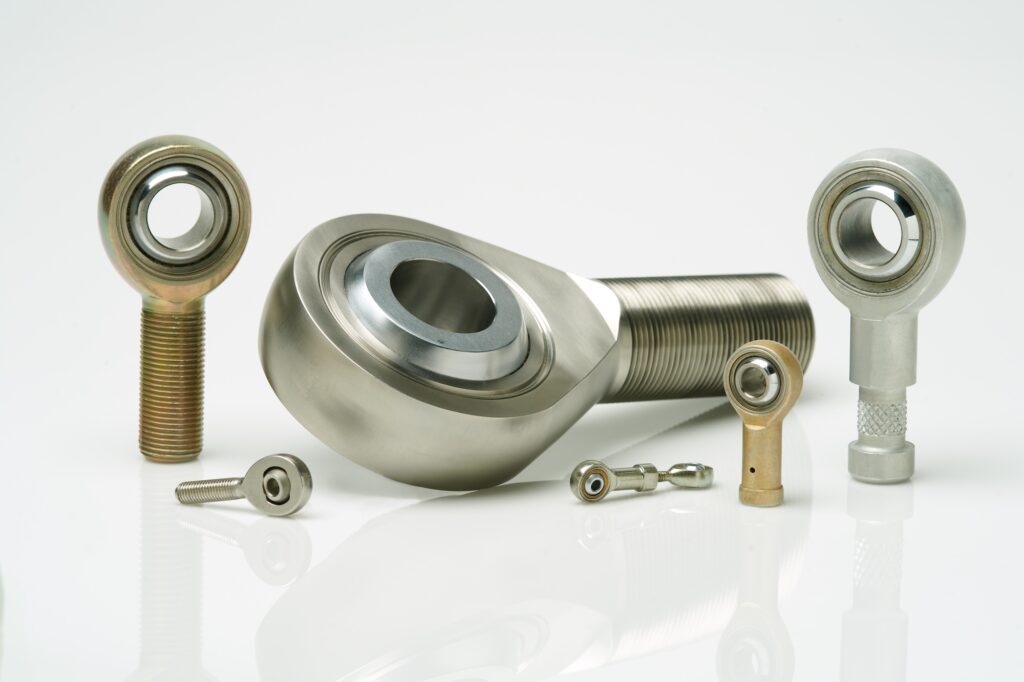
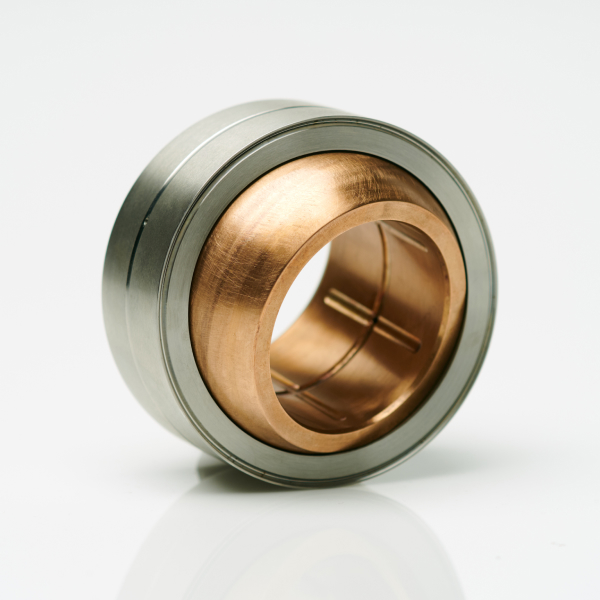


Sometimes the right motion-control solution is more than a bearing and a rod end.
When multiple components must work together through the same load path, range of motion and installation envelope, engineering the linkage as an assembly can create a cleaner and more controlled solution.
An aerospace linkage assembly combines rod ends, spherical bearings, machined components or related hardware into a controlled motion-control solution. An integrated assembly may make sense when component interfaces, tolerance stack-up, packaging, installation, sourcing or system-level motion are difficult to manage effectively as separate parts.
Every component in a linkage can meet its individual drawing and the complete mechanism can still be difficult to assemble or control.
The reason is simple: the system does not experience individual drawings. It experiences the combined geometry, tolerances, joints, fasteners, brackets, loads and movement of the completed mechanism.
For aerospace systems, that distinction matters. Linkages can support flight controls, steering mechanisms, actuators, landing gear, structural motion and other applications where reliable movement depends on how multiple interfaces work together.
Radial Bearing’s linkage assemblies combine bearings, rod ends and machined components into complete engineered solutions for demanding motion-control applications.
What is an aerospace linkage assembly?
A linkage assembly is a mechanical system that connects individual motion-control components into a defined structure that transfers force or movement.
Depending on the application, an assembly may include:
When does an integrated linkage assembly make sense?
Multiple Interfaces Must Work Together
If rod ends, pins, clevises, brackets and linkage members all influence the final geometry, evaluating them together can provide better visibility into the complete motion path.
Tolerance Stack-Up Is Important
Each component can be within tolerance while the combined variation affects alignment, installed length, freedom of movement or assembly fit.
Packaging Is Tight
Aerospace systems frequently have limited space. A system-level review can balance articulation, mounting points and surrounding structures instead of treating each component independently.
Customer Assembly Burden Is High
Supplying a completed or partially integrated assembly can reduce the number of separate components, interfaces and sourcing activities the customer must coordinate.
Why can individually correct parts still create an assembly problem?
A linkage is a chain of interfaces. Each bore, pin, thread, bracket, rod end and machined feature introduces dimensional variation.
The problem is not that tolerance exists. Tolerance is unavoidable. The design challenge is understanding how those allowable variations combine across the complete mechanism.
Component compliance does not automatically equal system compliance.
An integrated design review can evaluate the completed geometry, interfaces and movement instead of assuming that individually acceptable components will always produce the intended system behavior.
What should engineers control at the linkage-assembly level?
| Design Area | Questions to Resolve | Why It Matters |
|---|---|---|
| Overall Geometry | What installed length, mounting points and range of movement are required? | The complete assembly must fit the actual system envelope. |
| Load Path | How does force travel through rod ends, bearings, pins and linkage members? | Individual components must support the actual forces created by the complete mechanism. |
| Misalignment | Where does angular movement occur and what limits it? | Surrounding geometry can restrict usable bearing articulation. |
| Tolerance Stack | How do component tolerances combine across the assembly? | Accumulated variation can affect fit, alignment and installed position. |
| Materials and Finishes | What corrosion, wear, strength and environmental requirements apply? | Each component must remain compatible with the operating environment and neighboring parts. |
| Inspection | Which dimensions or functional characteristics should be verified at the assembly level? | System-level inspection can confirm characteristics that cannot be evaluated from individual parts alone. |
Where can linkage assemblies support critical motion?
Radial Bearing products support motion-control applications across commercial aerospace, military aircraft, rotorcraft, UAVs and other demanding platforms.
Control Surfaces
Rudders, flaps, spoilers, elevators and related mechanisms require controlled movement through defined geometry and load paths.
Landing Gear and Steering
Linkages may need to accommodate articulation, dynamic loading, packaging constraints and demanding environmental exposure.
Actuation Systems
Rod ends, bearings, pins and linkage members can work together to transfer actuator motion into controlled mechanical movement.
Structural and Door Mechanisms
Hinges, doors and related assemblies may require compact articulation and repeatable positioning within constrained spaces.
How does an engineered linkage assembly move from requirement to production?
Complete assembly or individually sourced components?
| Consideration | Separate Components | Integrated Assembly |
|---|---|---|
| Design Ownership | Customer coordinates each component and interface. | More of the interface review can be considered as one engineered system. |
| Tolerance Management | Individual component tolerances must be reconciled by the customer. | System-level requirements can be evaluated across the complete assembly. |
| Sourcing | Multiple components may come from multiple suppliers. | Selected components can be consolidated into one assembly source. |
| Assembly Labor | Customer performs more component integration. | Supplier may provide completed or partially completed integration. |
| Inspection | Parts are typically verified individually. | Assembly-level characteristics can also be evaluated where required. |
| Best Fit | Simple mechanisms with well-controlled interfaces. | Complex, constrained or application-specific mechanisms where interfaces matter. |
The assembly should be designed around the application, not the catalog
Some linkage assemblies can be built primarily from standard components. Others need custom brackets, pins, clevises, arms, rod ends, bearings or linkage geometry.
Radial Bearing’s custom capabilities support collaborative design, precision machining, component integration and assembly development when the application requires more than standard products.
The objective should remain practical: use standard components where they fit, customize where the application requires it, and control the interfaces that determine system performance.
What information helps an aerospace linkage review move faster?
Good input allows the engineering team to understand the system rather than reconstructing the application one question at a time.
Linkage expertise from individual joints through complete assemblies
Radial Bearing’s product portfolio includes rod ends, spherical bearings, assemblies and custom engineered solutions.
That breadth allows engineering conversations to move beyond a single component when the application requires system-level thinking.
For aerospace and defense customers, Radial Bearing combines product-specific bearing expertise, precision manufacturing, assembly capabilities and certified quality systems with support for application-specific requirements.
Aerospace linkage assembly FAQs
What is an aerospace linkage assembly?
An aerospace linkage assembly is a mechanical motion-control system that combines components such as rod ends, spherical bearings, linkage members, pins, clevises, brackets or other machined parts into an integrated assembly.
Why use a complete linkage assembly instead of buying individual parts?
An integrated assembly may be useful when component interfaces, tolerance stack-up, packaging, sourcing, assembly labor or system-level movement need to be evaluated together rather than managed as separate components.
What is tolerance stack-up in a linkage assembly?
Tolerance stack-up is the combined dimensional variation created by multiple components and interfaces. Even when each individual component meets its drawing, accumulated variation can influence installed length, alignment, fit or movement.
Can standard rod ends and spherical bearings be used in a custom linkage assembly?
Yes. A custom linkage assembly does not require every component to be custom. Standard components can be used where they meet the requirement, with custom elements added only where geometry, interfaces or performance require them.
What information should be included in an aerospace linkage assembly RFQ?
Useful information includes mounting geometry, installed length, range of motion, loads, misalignment, environmental conditions, material and finish requirements, quantities, service-life expectations and applicable inspection or documentation requirements.
Does Radial Bearing manufacture custom linkage assemblies?
Yes. Radial Bearing supports complete and application-specific linkage solutions using rod ends, spherical bearings, machined components and custom engineering when standard products alone do not meet the system requirement.
Have a linkage that is becoming harder to manage one part at a time?
Share the motion, loads, interfaces, packaging and program requirements with Radial Bearing. Our team can review whether a standard component approach or a more integrated linkage assembly is the better fit.
Discuss Your Linkage Application